
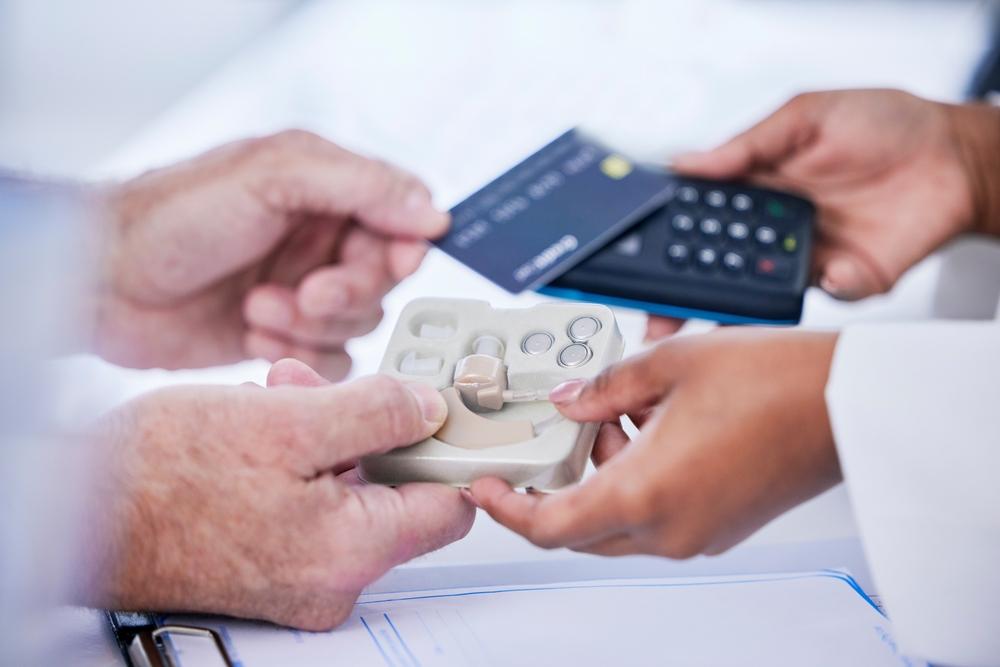
If you’ve looked into hearing aids, one of the first things you’ve probably noticed is the price. Based on the sophistication of the digital signal processing and the required audiometric programming, these devices span a wide pricing spectrum. Such a capital requirement often surprises families, leading them to prematurely halt their pursuit of better auditory health.
The sticker price is a real metric, yet it rarely reflects the actual net expenditure for the patient. Many don’t realize that the sticker price is rarely what you actually end up paying. Between insurance, pre-tax accounts, and financing options, there are multiple ways to reduce or spread out the cost.
This guide walks you through the most common options so you can understand what’s available before you go into an appointment and, hopefully, feel more confident about the investment in your hearing health.
Maximizing Private and Employer Insurance Benefits for Acoustic Devices
Before expecting to finance the entire purchase independently, verify your existing medical coverage parameters.
Under private healthcare frameworks, the scope of coverage for speech-preservation technology is subject to extreme variation. Certain contracts provide percentage-based co-insurance, whereas alternative policies offer a rigid monetary stipend. In contrast, certain insurance products offer zero provision for auditory assistive devices. To find out more, call the number on your insurance card and ask about hearing aid benefits. You should explicitly confirm benefit renewal intervals, whether post-fitting care is covered, and contracted clinic networks.
If you’re on Medicare, it’s important to know that Original Medicare (Parts A and B) does not cover hearing aids. Fortunately, choice Medicare Part C programs fill this gap by providing an annual allowance or discounted device network.
For patients utilizing state-administered Medicaid, the availability of auditory benefits is determined strictly by state law. Certain jurisdictions offer full or partial device funding for qualified applicants, which your clinic can help verify.
Maximizing Health Savings and Flexible Spending Accounts for Otologic Technology
Possessing an HSA or an FSA equips the patient with a highly efficient asset for absorbing device costs.
These clinical instruments meet the legal definitions for qualified medical expenses, authorizing the use of untaxed income. This structural tax advantage fundamentally alters the true net cost of the medical hardware. By way of example, a 22% marginal tax rate converts a nominal $2,000 device cost into an effective $1,560 expense. HSAs roll over year to year, while FSAs usually expire at the end of the year. Consequently, tactical deployment of seasonal FSA allocations prior to their structural expiration is highly recommended! Both prescription and many over-the-counter hearing aids qualify, so it’s worth checking your balance before your appointment.
Utilizing Patient Financing Programs to Defer Auditory Technology Costs
To avoid a single large capital outflow, medical practices frequently offer specialized patient installment plans. Managed through medical financing leaders like CareCredit, these structures frequently supply zero-interest terms to qualified applicants. This arrangement protects the patient from selecting sub-optimal technology merely to meet an immediate budget limit.
Financing is a normal part of the conversation. If budgetary constraints are a factor in your decision-making, ensure you communicate this to your provider. Keep in mind that these diverse consumer pathways were developed to address these precise medical realities! No individual should be forced to endure financial instability or compromise their systemic well-being to treat an auditory deficit.
Navigating Veterans Administration (VA) Otology and Hearing Aid Benefits
Auditory trauma and tinnitus represent the most prevalent service-connected disabilities, prompting the Department of Veterans Affairs (VA) to maintain robust rehabilitation programs.
Veterans meeting specific enrollment criteria can procure advanced prescription amplification devices entirely through VA medical benefits. Even in the absence of an official service-connected disability rating for hearing, overall VA priority grouping may grant access. For those who have yet to leverage their military benefits, initiating a query with your regional VA medical center is strongly advised.
Alternative Community-Based Grant and Aid Programs for Hearing Hardware
Nonprofit and community-based programs can help make hearing aids more affordable. Renowned non-profits like the Starkey Hearing Foundation and civic clubs like the Lions Club routinely sponsor individuals requiring acoustic aid. Some states also have hearing aid programs for low-income adults.
Although these civic grants frequently carry rigid income thresholds and waiting intervals, they are highly valuable when commercial insurance fails. Utilizing the online assessment tools provided by these charities is a direct way to open a dialogue regarding hardware assistance.
OTC Hearing Aids: Are They a Cheaper Alternative?
The OTC retail segment offers a highly economical alternative, with average pair pricing falling between several hundred and one thousand dollars. This retail equipment is specifically engineered to address uncomplicated, mild-to-moderate sensory changes in mature populations.
However, without a professional fitting, many people don’t get the results they’re hoping for. For individuals demonstrating pronounced or complex sensory deficits, physician-fitted clinical devices consistently yield superior acoustic gain stability.
Prior to opting for a retail OTC device solely based on economic factors, a formal diagnostic audiogram is highly recommended. OTC hearing aids are usually a good option for someone waiting for their fitted hearing aid or for a response on whether they qualify for certain programs or benefits. They deliver a satisfactory temporary compromise, but remain structurally inferior to custom clinical systems over an extended timeline.
A Collaborative Approach to Affordable Hearing Care and Device Selection
Our clinical team specializes in managing financial procurement and insurance coordination on a daily basis. There are often more options than people expect.
By providing your current insurance documentation at check-in, our specialists can cross-reference your network benefits and construct a tailored payment solution. Contact our scheduling desk today or utilize our digital portal to book your comprehensive diagnostic audiology appointment. We look forward to delivering the accurate answers and balanced payment options necessary to restore your connection to the world.