
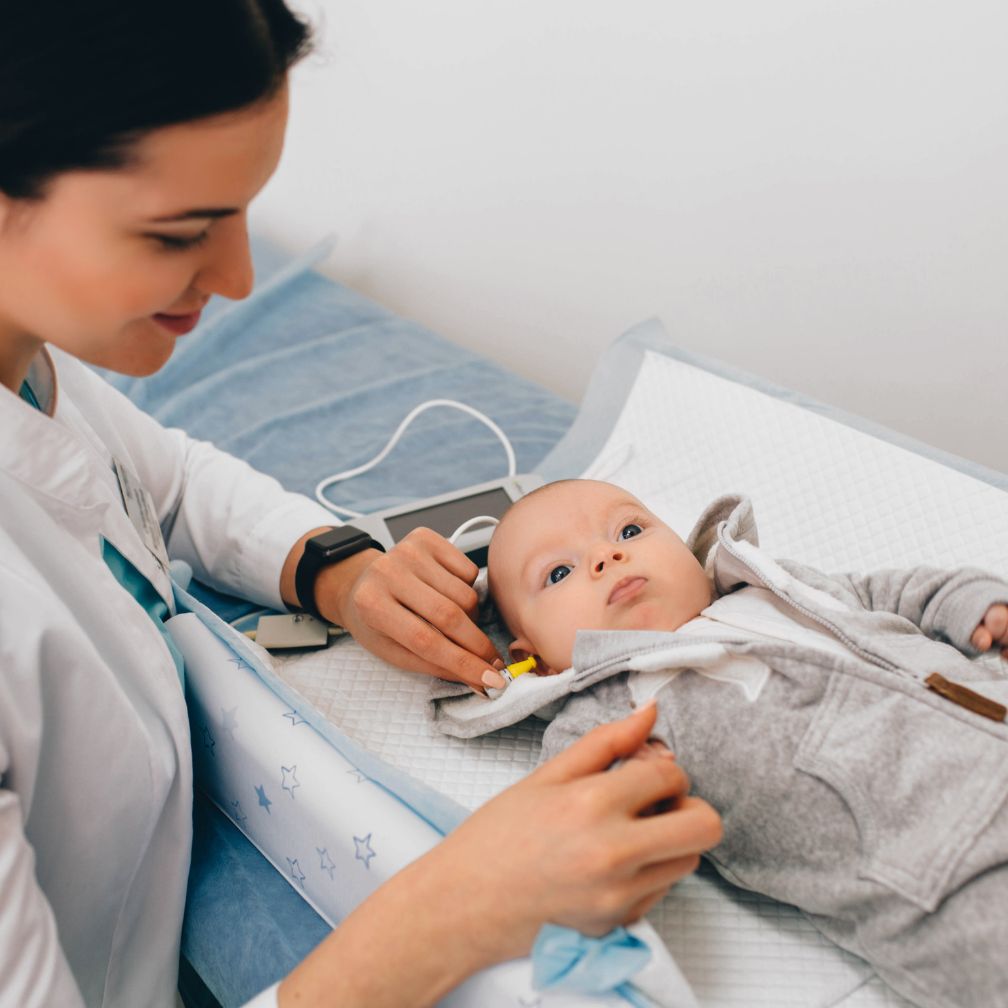
For brand-new parents, learning that a child presents a hearing difficulty rapidly creates overwhelming emotional strain. Yet the positive reality is: via timely identification and therapeutic support, children with hearing deficits are able to thrive exceptionally. In fact, such infants can build early speech, interactive expression, and deep bonds across their environment, fostering an enriched future!
Two of the most effective tools for supporting infants with hearing loss consist of pediatric hearing aids and cochlear implants. Further in this guide, we review how they work and how to know which one is right for your child.
Analyzing Infant Auditory Deficits
Auditory decline across newborns typically originates from several potential sources, including:
- Key inherited genetic traits (even where ancestral histories yield no precedent)
- Prenatal viral exposures like cytomegalovirus (CMV) or rubella pathogens
- Delivery difficulties, such as acute oxygen deprivation or premature delivery
- Particular medications used in specialized neonatal intensive care
The most important step? Prompt clinical identification. As an outcome, babies in United States hospitals complete hearing screening protocols before returning home. Respected pediatric hearing experts actively deploy the industry-standard “1-3-6” target timetable:
- Officially screened by 1 month
- Diagnosed by 3 months of age
- Early care (incorporating amplification systems or active therapy) established inside 180 days of birth
Executing these procedural steps delivers to infants their ideal path toward flourishing speech, language mastery, and neurological health. Should you seek direction regarding these auditory screens, your family pediatrician will gladly offer support!
Infant Hearing Aids: Overview & Benefits
In supporting babies who exhibit mild to severe hearing deficits, specialized hearing aids usually function as the initial care standard. These lightweight ear-level units amplify ambient sound, helping babies hear human speech and environmental sounds with far greater precision.
Customized infant hearing instruments operate as:
- Completely safe for deployment on babies just a few weeks after birth
- Manufactured with soft, gentle ear impressions that adjust seamlessly as the baby grows
- Outfitted with child-proof battery covers and specialized pediatric safety components
- Uniquely adjusted by a trained pediatric hearing practitioner to match your child’s exact hearing needs
While your infant develops, hearing devices require routine recalibration to ensure proper fit and effectiveness.
Pediatric Cochlear Implants: An Advanced Solution
If a baby exhibits profound sensorineural hearing loss and derives insufficient benefit from wearable aids, clinicians often recommend a cochlear implant. In contrast to traditional hearing devices, cochlear implant systems:
- Mandate careful surgical placement directly into the auditory system
- Fully bypass non-working sections inside the inner ear
- Change ambient sound waves into direct electrical impulses that directly excite the acoustic nerve
Precision-implanted cochlear devices remain:
- Officially sanctioned by the FDA for pediatric patients as young as 9 to 12 months
- Extremely effective when combined with structured early intervention and dedicated family support
- Considered appropriate only after extensive diagnostic reviews by an expert audiologist and ear, nose, and throat doctor
That pre-surgical path incorporates diagnostic imaging, detailed hearing tests, and in-depth discussions surrounding achievable long-term goals.
Comparing Hearing Aids and Cochlear Implants: Key Differences
- Mild to severe levels of impairment utilize Hearing Aids; Severe to profound hearing loss necessitates Cochlear Implants
- Non-Invasive external placement: Hearing Aids; Invasive surgical placement: Cochlear Implants
- Acoustic sound amplification: Hearing Aids; Electrical signal stimulation conversion: Cochlear Implants
- Starts at Infancy: Hearing Aids; Surgery can begin at 9-12 months: Cochlear Implants
Summary Thoughts: Supporting Your Child’s Hearing Journey
Should your baby receive a formal hearing loss diagnosis, you possess multiple viable options and dedicated expert support. Through the guidance of experienced pediatric audiology teams, numerous children grow to master language development completely comparable to their healthy peers.
Whether your baby benefits most from custom hearing aids or a cochlear implant system, early intervention can make a lifelong difference.
Do you need professional advice regarding your baby’s current hearing health? Contact our clinical team today to arrange a comprehensive evaluation and customized treatment program.