
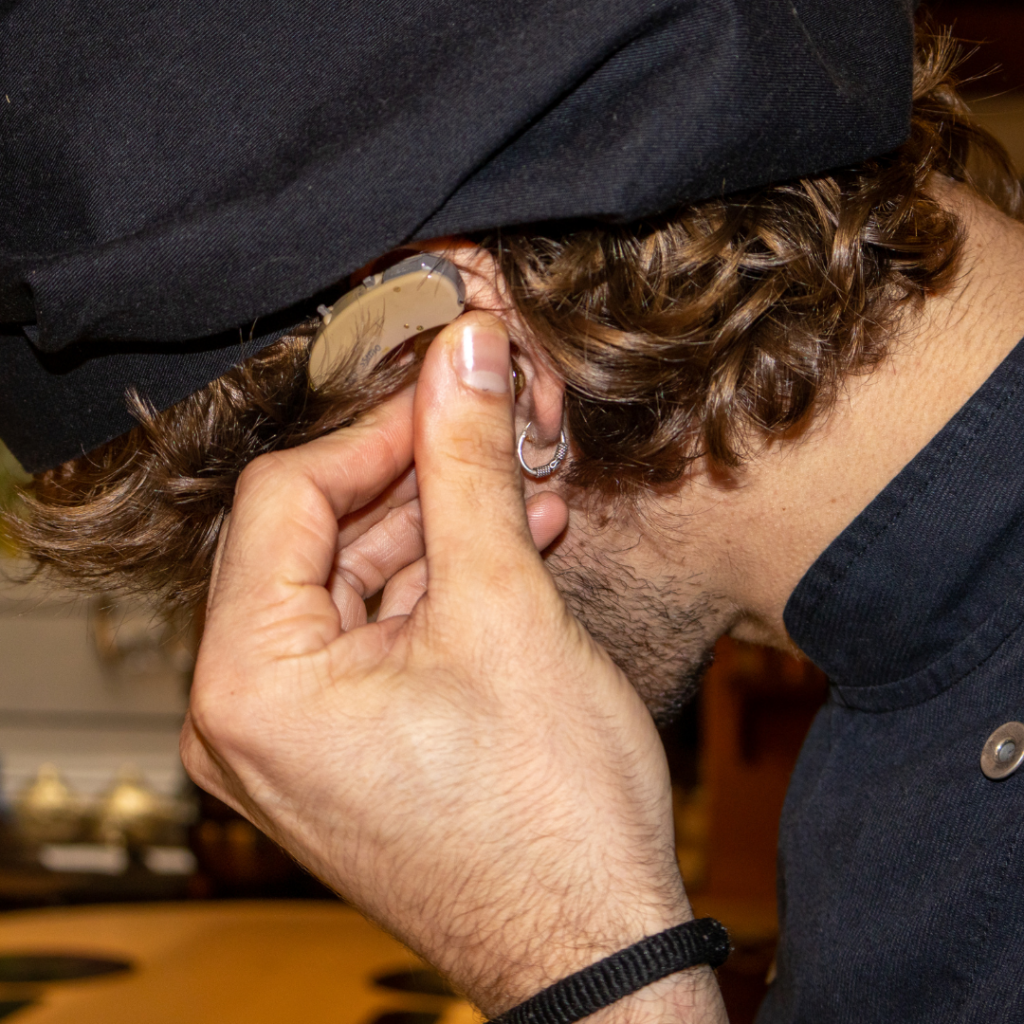
Tracking speech in busy dining venues can feel exhausting when environmental noise drowns out your hearing. Our practice can evaluate hearing in both quiet and noisy conditions to identify what makes these environments difficult. As soon as we identify the physiological cause of your difficult hearing, we deliver personalized rehabilitation options.
How Can Hearing Seem Normal at Home but Fail in a Restaurant?
Calm domestic settings establish a positive signal-to-noise ratio, allowing target speech to stand out clearly from faint background noises. Restaurants create the opposite situation. Layered diner voices, kitchen activity, foreground music, and room reverberation muddy speech signals, requiring intense mental strain to follow dialogue.
Such difficulty frequently signals sensorineural high-frequency hearing loss, auditory processing dysfunction, or noise-induced cochlear damage. Poor visual illumination, mental fatigue, physical distance from the speaker, and divided focus exacerbate speech-recognition problems. It is common to display normal baseline audibility on conventional hearing tests while failing comprehensive speech-in-noise testing. Consistent difficulty following restaurant conversation warrants clinical investigation even when everyday hearing seems largely unaffected.
The Audiological Process for High-Frequency Hearing Loss
We begin with a history of the situations that cause trouble, along with questions about noise exposure, tinnitus, medications, family history, and changes in either ear.
Pure-tone audiometric evaluations measure the absolute quietest sounds audible across specific octave frequencies using air and bone conduction. Patients with high-frequency hearing loss typically exhibit a sloping audiogram configuration where sensitivity steadily declines at elevated pitches. Additional testing may include tympanometry to assess middle-ear function and word-recognition testing to measure speech understanding.
Given that isolated quiet booths do not reflect chaotic restaurant acoustics, specialized speech-in-noise testing delivers invaluable diagnostic data. It calculates your ability to identify verbal phrases as competing background noise levels rise. Together, these results show whether the problem involves audibility, speech clarity, background-noise processing, or a combination of factors.
Understanding Auditory Processing Disorders in Noisy Environments
An auditory processing disorder compromises how the central auditory pathways and brain decode incoming acoustic information. The ears may detect tones at expected levels, but the brain may have difficulty organizing competing signals, distinguishing similar speech sounds, or following rapid conversation. Our clinical team starts by examining peripheral auditory thresholds, subsequently deciding if an auditory-processing test battery or multidisciplinary consultation is necessary.
How to Improve Speech Clarity in Challenging Acoustic Environments
Small changes can improve the signal reaching your ears and provide clearer visual cues. Before leaving home, identify quieter dining venues or plan to eat during less crowded service times. Dining locations utilizing sound-absorbing elements like booths, felt panels, window curtains, and carpet offer better acoustics than high-ceilinged rooms with hard surfaces.
At the restaurant:
- Request table placement positioned away from dishwashing stations, bustling bars, sound speakers, and celebratory gatherings.
- Position your chair against a perimeter wall to diminish competing auditory chatter behind your head.
- Position yourself directly opposite your companions where direct lighting highlights their facial expressions.
- Keep the distance between speakers as short as comfortably possible.
- Direct your better-performing ear toward the companion you most need to understand.
- Ask speakers to reword the specific phrase you missed rather than repeating their initial wording.
- Verifiably confirm essential conversational facts instead of bluffing comprehension.
- Step away for a brief auditory rest when cognitive listening fatigue begins to set in.
- Invite companions to focus on clear articulation and a measured, comfortable cadence.
- Shouting can distort speech and does not necessarily make words easier to understand.
What Are the Best Tools for Hearing with Background Noise?
Determining the proper hearing technology hinges on the underlying disorder, everyday listening environments, and whether peripheral hearing loss is diagnosed. Prescription hearing aids fitted by an audiologist leverage directional microphone arrays, advanced digital noise reduction, and dedicated restaurant programs to focus on frontal speech while dampening background sound. Realistic expectations are vital, since even advanced hearing devices cannot completely erase background conversational chatter.
Pairing your devices with a remote wireless microphone generates a substantial improvement in the direct signal-to-noise ratio. Clipped near the speaker’s mouth or set nearby, the transmitter sends voice signals wirelessly to matched hearing aids or a receiver. This targeted setup effectively neutralizes the negative impacts of room distance and interfering background noise.
Additional effective assistive technologies include:
- Dedicated table microphones engineered to capture small-group dialogue
- Telecoil sensors configured to access hearing-loop broadcasts in looped facilities
- Smartphone speech-to-text or live-captioning applications
- Smart earbuds offering dedicated speech-in-noise amplification settings
- Decibel-monitoring apps and crowd-sourced dining platforms that track restaurant noise
Our audiology staff helps you evaluate options, ensures wireless compatibility, and trains you on operating your chosen equipment.
Clinical Audiology Care for Hearing in Complex Noise
A hearing evaluation can move the conversation beyond “I hear fine in quiet.” We assess the specific acoustic settings, speaker dynamics, and volume levels that disrupt your hearing to administer targeted evaluations. Your comprehensive workup may involve pure-tone hearing thresholds, middle-ear testing, recorded word recognition, and speech-in-noise measures. Specialized auditory-processing testing can be ordered when patient history and preliminary audiometric findings warrant deeper neural investigation.
Sudden, one-sided, or rapidly worsening symptoms may require medical evaluation by an ear, nose, and throat physician. Comprehensive clinical care targets the physiological roots of hearing difficulties rather than simply writing them off as bad restaurant acoustics.
Schedule a Diagnostic Hearing Evaluation Right Away
If crowded restaurant settings cause you to feel disconnected, tired, or forced to guess at conversations, arrange a diagnostic hearing evaluation today. We can evaluate targeted solutions to optimize your hearing in noisy environments using prescription hearing aids, assistive listening technology, or communication strategies tailored to you.
Contact our practice today to book your consultation and take a decisive step toward reconnecting in social settings.